 Written by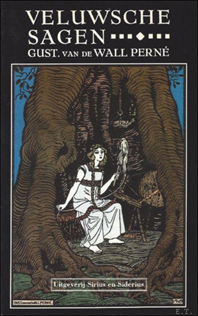
In piecing together the particularly difficult puzzle of how heathenry was lived in the Low Countries, the Veluwe (in the Netherlands) is a valuable place to examine more closely. Under the loud call of Wodan’s mighty ravens, I set out to investigate, with Gust van de Wall Perné’s (1877-1911) book De Veluwsche Sagen under my arm. With respect for nature and its inhabitants – both the visible and the hidden – I delved deeper into stories and places that held the Low Countries under their spell for centuries.
The Veluwsche Sagen
In the days when man was not yet glued to the television, when days consisted of diligent labor and life took place in small communities, evenings were filled with inspired stories. Driven by a heart full of passion, Gust decided to compile a collection to capture in eternity the tales he heard as a child. Stories that left a great impression on him. He traveled around the wondrous and magical Veluwe as “The Wanderer” (reference to Wodan) presented it to him. In the following segment I made a brief selection of stories that stuck to me like mud to a rooting wild boar. Not wishing to turn this into a book review, because for that I strongly recommend that you read the book for yourself.
The Thunderer
With feature characters like Thunar the Thunderer – with his fiery red beard – who bravely and magnanimously battles a giant snake, ancient powers take shape. According to Gust, in this mythical battle lies even the origin of some local lakes.
At the season when the winter giants were battling the gods of summer, Thunar stormed through the sky on his chariot to maintain order and hold back the forces of chaos.
The winter giants retreated into the dark forest and enlisted the help of a huge snake – a gigantic worm that attracted the attention of the thunder god by climbing into the tallest oak tree and spewing its poisonous breath into the dark sky.
Thunar’s ferocious beard fluttered like a red flag in the stormy wind. The sky trembled and the roar of his hammer sounded like a sledgehammer blow. A scene reminiscent of Thor’s battles against the Midgaard snake Jörmungandr. All over the world, snakes and worms play a central role in myths as representations of chaos and primal power. Snakes and dragons are closely linked in ancient pagan traditions. In Proto-Germanic, there was one word for both: *wurmiz.
With his thunder sledgehammer, which never misses its mark, Thunar struck the poisonous monster – along with the oak tree – into the depths of the earth. The crackling lightning of his hammer mixed with the foul-smelling fumes of the snake venom, sending up a poisonous cloud. The chariot staggered, and the round-bellied redbeard also tumbled into the abyss.
When the dust cleared, two gaping holes were left behind – as deep as the world itself. Gradually, these filled with water. The mighty sea god (not named) sailed in with his ship and rescued Thunar from the deep. Thus arose, according to tradition, the Bleeke Lake (also called the Lake of the Gods), where the thunder god went down, and the Uddeler Lake, where the serpent met his end. Probably at the Lake of the Gods the Thunder God was worshiped.
These lakes still exist and can be found on the map — you can visit them anytime.
Witte Wieven in the Low Countries
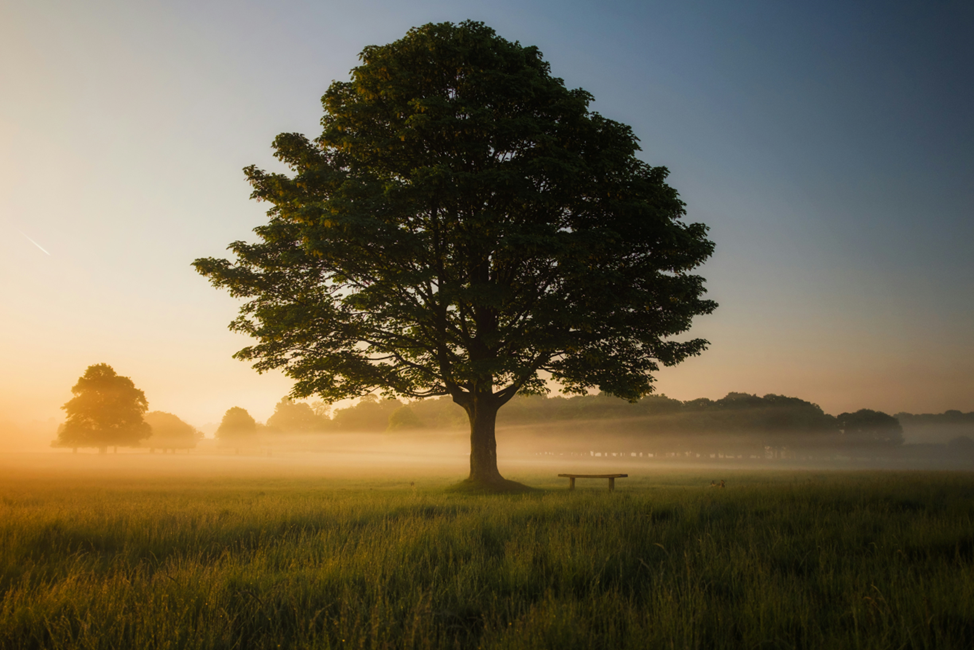
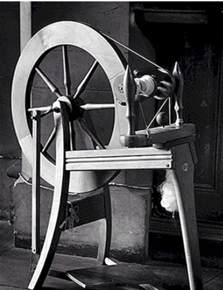
In the old beech tree near Hoog Soeren lives the Witte Juffer, a ghostly apparition that sometimes teases travelers at night or frightens children. Yet she is also known for her helpfulness. In the hollow of the tree, she spins her wheel, with which – it is said – she weaves the fate of those who cross her path.
Some consider her a ‘Witte Wief’ (Dutch) – a wise woman or priestess who watches over sacred sites such as burial mounds and springs. She possesses knowledge of buried treasure, which – in my humble opinion – may symbolize hidden wisdom.
The spinning wheel is a clear reference to Urd, the ‘Schikgodin’ (Dutch related to ‘Norn’) who lives at the foot of the tree of life Yggdrasil. According to lore, she, along with the other Nornir, carved runes into the trunk of the world tree to record destiny – and in some regions, it was believed that they also weaved fate, as did The ‘Witte Wief’. A similar modus operandi is found with the ‘Schikgodinnen’ (Dutch) of almost all major mythological traditions. This reminds us that the old faith doesn’t always need to be sought in distant lands — often, it rests close to us, woven into the very soil beneath our feet.
According to tradition, two brothers were looking for money to pay for the expensive medicine for their deathly ill mother. First they decided to sell their animals at the market in Apeldoorn.
On the way back, they stopped at the old beech tree, where they respectfully took off their hats for the woman in white. She gave them an enigmatic clue as to the place where a treasure was buried, saying, “Whoever can be silent in this shall possess it.
To our ancestors, the beech and the oak were sacred trees, imbued with spirit and strength. The oak, with its rough, furrowed bark, was seen as the king of the forest – dedicated to the thunder god and a symbol of fortitude. With the arrival of Christianity, many of these sacred trees were not cut down but instead consecrated: their ancient power wrapped in new stories. Even today, you can still see Mary chapels nailed to tree trunks — yet beneath those boards beats the heart of the old faith.
The brothers followed her advice and indeed found a heavy iron chest in the ground. But when they tried to lift it, the chest threatened to fall, causing one of the brothers to cry out. At that moment, the treasure vanished.
Yet shortly thereafter, their mother miraculously returned to health. And although they came home empty-handed, the brothers considered her recovery the greatest treasure of all.
The Witte Juffer’s spinning wheel and the story of the hidden treasure evoke several possible meanings. Perhaps it revolves around caring for family, a value that clearly comes to the fore in this story. Or perhaps it is a lesson in modesty, in learning to listen – even to be silent.
What lies hidden in the earth is not always meant to be dug up – sometimes just to be understood. What is the true message? That, as with many ancient sagas, remains for the listener to guess.
The atmosphere of The Wild Hunt
The Wild Hunt is vividly captured onto the page — a tale whispered through the ages, carried on the breath of the wind, where every village and every land has imbued it with their own sacred hues and living echoes.
The writer tells of a day when, during a rising storm, he found shelter in a cabin inhabited by a man and his son. They gathered around the flickering hearth, where the host sought to share a tale from the days of old.
But even before the story truly took flight, the wind outside began to chase and howl like a wolf. The narrator listened. In the storm, voices seemed to screech along, whispering among the trees.
The roof began to creak as if it would crash down. A sudden squall blew through the chimney and extinguished the fire. Paralyzed with tension, the three sat glued to their chairs, the pitch-black darkness, it seemed like eternity.
When they finally stepped outside, they saw a mighty, ancient oak tree not far from the cabin, struck and split by lightning. As if the Wild Hunt, itself had rushed by – and left its mark.
The Wild Hunt is handed down to us in countless versions, and its meaning often remains a mystery. There are varying theories about who led this hunt, and at least as many about the story’s purpose.
Some see it as a relic of ancient initiation rites; others as a cautionary tale, meant to urge people to live honorably and justly. Sinterklaas, a tradition still celebrated in the Low Countries today, also has its origins in this myth.
Gerda and Froh
In the legends of the Veluwe the pagan story of Gerda and Froh (Yngvi-Freyr) lives on, a myth about the awakening of the earth and the sacred cycle of life and death. This story has echoes in many other cultures.
When the winter giant Hymer rules over the hushed land, he keeps his daughter Gerda – the sleepy seed in Mother Earth’s womb – chained in shackles of ice. Around her are fiery ramparts, the morning and evening reds as sentinels of her captivity.
But then Froh, the god of fertility, sees her from the heavens. His heart is stirred by her beauty, and his fire longs to awaken the earth once more. He sends a white bird as his messenger, which touches her soul with an enchanting song. Then he mounts his loyal steed and begins his journey.
At the gate sat a one-eyed guardian, watching with his two dogs – an apt image of the Alfather himself, who can move into all worlds and cast his gaze on everything. Gerda approaches him with dignity and offers him a drink, as is proper under the ancient laws of hospitality – a reverent custom sung in the Hávamál.
He hands her eleven golden apples, signs of the months to come, and even the ninefold ring of light. But Gerda rejects his gifts. Her love is not for sale: buried in her father’s garden are hidden treasures – seeds that rest in the dark womb of the earth, waiting for their time.
Froh then understands that only with his sunfire those treasures will awaken. Without his power, no bloom; without her fertile soil, no life. He speaks words of profound truth, and Gerda sees that their union is the key to the coming of spring.
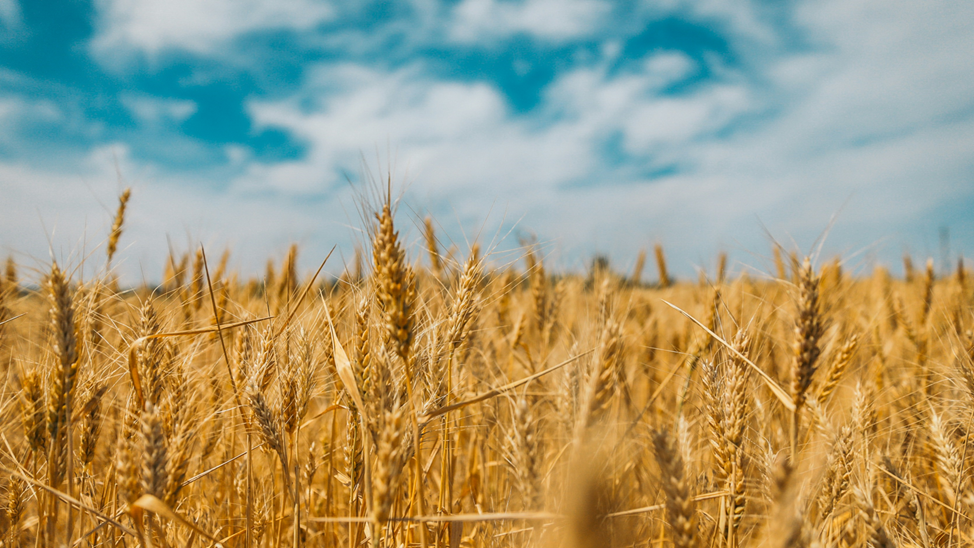
When she reaches out her hand to him, the bonds of ice break and nature awakens. Flowers open like ancient spirits remembering their names, butterflies dance in the sunlight, trees shed their winter clothes. fairies, Witte Wieven (Dutch) and forest spirits celebrate their sacred festivals in the valley of Pomphul where the scene took place.
The wedding of Froh and Gerda is more than love – it is a ritual of life, a covenant between sun and earth, a victory of growth over stillness. It is the promise that after every winter, life returns. Of existential importance to us as human beings, a story of hope that the fields will flourish again under the spring sun.
Conclusion
To avoid summarizing the entire book, I have limited myself to the above passages. But let it be clear that this book is highly recommended for those interested in mysticism and mythology. Most of the places described in this illuminated masterpiece can still be visited today.
Many seekers of the old faith turn to the North, where the sources are more abundant. While this is not entirely untrue, I encourage everyone to also explore alternative sources, to examine them critically, and to weigh them with care.
Contemporary speaking nature and symbolism in the Veluwe
Anyone looking at the Veluwe on Google Maps will see that the map is still largely colored green. A variety of flora and fauna can be found here. The red deer, wild boar, mouflon and roe deer are just a few examples from the wide biodiversity of the Veluwe. There are more than enough trails to enjoy this natural beauty in peace and quiet. The wolf also re-established itself here a few years ago – a sign that the wild soul of the landscape is recovering. On the Veluwe, forests, purple moors and quiet plains merge into a sacred landscape full of soul and meaning.
You can feel that nature spirits are still happy here. They get the respect they deserve. This is a clean, tended environment, where forest management is done responsibly – with attention to the balance between man and nature. The cyclical form of life is understood here with deep respect. Trees are still allowed to die here without being immediately cleared, much to the delight of fungi, insects and other microorganisms. In this way they are reabsorbed into the rhythm of the forest, to come back to life in a different guise.
Many robust ‘Donar Oaks’ have I encountered on my walks. They radiate a strength that can hardly be put into words – like sentinels of an ancient world that still lives on here, just below the surface.
There is no shortage of symbolism. Front yards are adorned with ravens, Kabouters (Dutch) and other figures from old stories. Doors and windows, hammered into tree trunks, decorate the walkway as if the boundary between human world and spirit realm is momentarily blurred. A ‘Kabouter Bos’ (Dutch) has even been created, especially for children – but adults also feel the enchantment there.
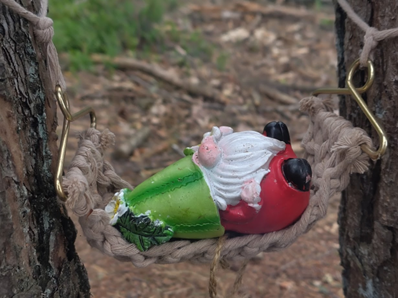
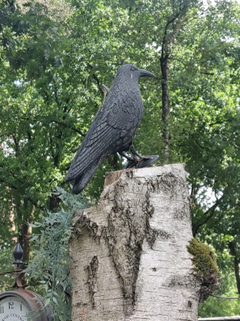
That these house spirits are mostly depicted outdoors these days shows how mythology can take on a contemporary look. Whereas they once watched over the house and its inhabitants inside by the fireplace, they are now honored as protectors of the landscape. Thus ancient beliefs live on quietly, hidden in play, art and tradition.
A tribute to what once was and footnote
The Veluwe still breathes the spirit of the old faith – a place where nature, myth and man coincide. Those who listen with true attention can feel that the sacred has never truly left this place.
Anyone familiar with the old sources cannot deny that respect for humans, animals, and the land lies at the heart of it all. That we must be both a good host and guest in life. Everything is connected by the sacred web of existence. Man is part of the divine in nature – he is not above it, but ín that greater whole, as one link in a living network of reciprocity.
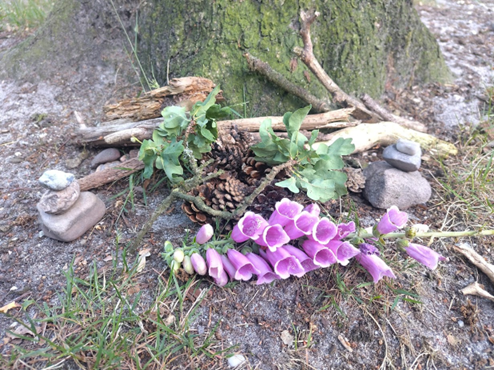
To honor this knowing, I made an offering to the gods, the land-spirits, and the ancestors. In silence, I spoke my intention: that we may carry forward the good and the wisdom, that we may not have to learn their hard-earned lessons all over again. That their strength may guide us, so that with faith, reverence and passion we can make the world a little better for everyone – not only for now, but also for those who come after us.
 Written by
 Written by