 Written by
 By H.E.
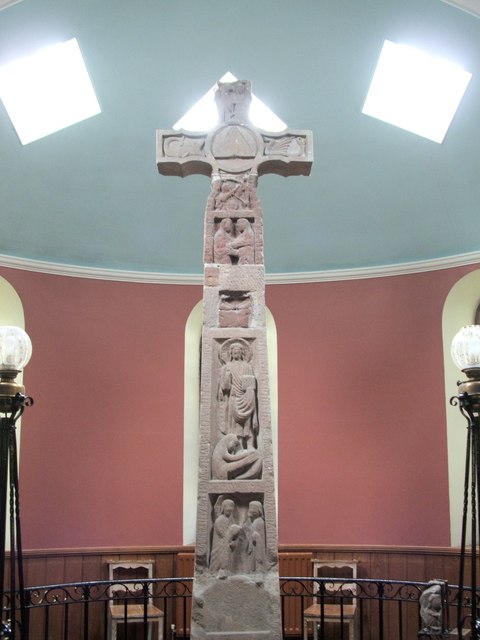
Early Anglo-Saxon inscriptions and literature show a complex interplay between pagan and Christian ideas about the afterlife. One of the earliest literary traces is The Dream of the Rood, a short Old English religious poem of over 150 lines, preserved in the 10th-century Vercelli Book. Parts of the text appear in runes on the 8th-century Ruthwell Cross, suggesting that the poem’s origins may date back to the 7th century. In the full poem, the speaker hopes to be seated at the feast in heaven with god and others that preceded him in death. The image of such a celebration, given the time period, reminds us of a hall where people go after death.
The concept of the hall as a social or sacred space is also present in Old English poetry. The term winsalo (“wine-hall”) appears in The Wanderer, preserved in the Exeter Book (c. 975). This manuscript contains over a hundred poems, mostly anonymous, many of which were likely transmitted orally before being written down.
A related term, Wlancra Winsele (“Winehall of the Proud”), appears in the 10th-century Junius Manuscript, in the final section of Christ and Satan. Scholars agree that the hall here is symbolic rather than literal, serving as a pedagogical tool in which pagan motifs illustrate Christian moral lessons. In the same manuscript there is another poem that has been the subject of intense scholarly speculation. This is the poem “The Wife’s Lament.” The dwelling place of the female speaker strongly evokes the Germanic conception of the afterlife.Hēt mec mon wunian on wuda bearwe, under āctrēo in þām eorðscræfe. Eald is þes eorðsele; eal ic eom oflongad. Literally: “in a forest grove, under an oak tree, in this earth-cavern.” Some interpretations proceed from the assumption that the woman is dead while the husband remains alive, suggesting that the text contains indications that support such a reading.
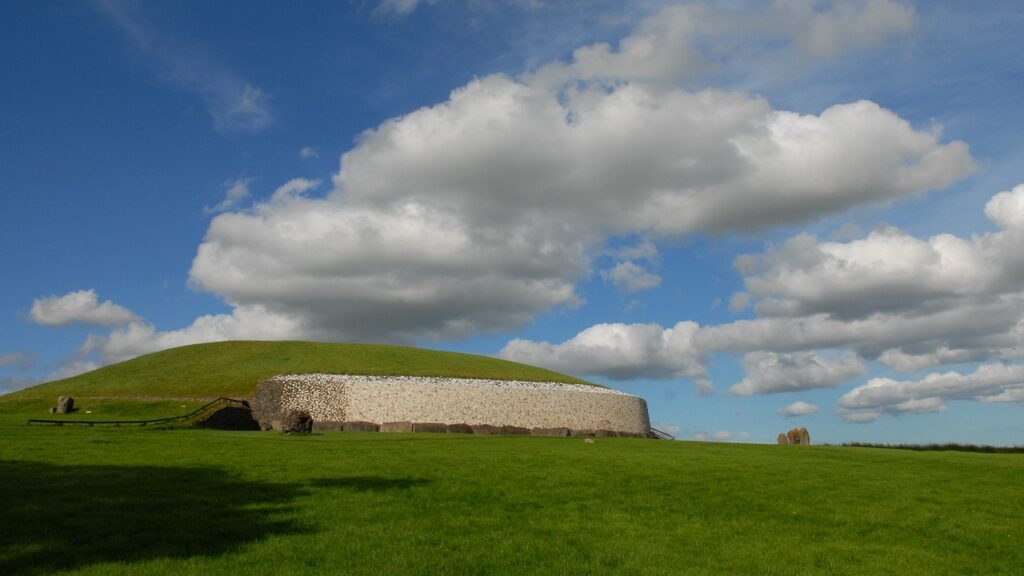
Beyond literary halls, early Germanic tradition sometimes considered burial mounds themselves as “halls.” Dead kings and heroes were thought to reside within these mounds, protecting the land and occasionally appearing to the living. This suggests that the earliest form of the “hall of the dead” was not a celestial building but a sacred hill. From this perspective, Valhalla can be seen as a mythic expansion of a warrior’s burial mound. And I see no shame in this. I read online that Valhalla is the most honorable destination for many. Without detracting from anyone’s faith, I want to say that Walhalla isn’t the only place a pagan might want to go. Most of our ancestors ended up in the underworld. Who wouldn’t want to be reunited with them? And is the underworld really such an evil place? Think about it… maybe death wasn’t about reaching one “perfect” place, but about continuing life in different ways, staying connected to family and community…
First we can read in the sources that not every hero was destined for Valhalla. In the Volsunga Saga, for example, Grunhild does not reach Valhalla but Hel, the general underworld. This indicates that Hel was not merely a place for ordinary mortals but the common destination for most dead, unless specifically chosen by Odin.
Christianized accounts, such as the story told by Bede of a Northumbrian man who visited the afterlife, also preserve traces of these older ideas. Bede describes four realms: a dark, cold place for the wicked; a fiery region of punishment; a pleasant, flowery intermediate zone; and a bright, heavenly realm for the just. While Christian in framing, these descriptions retain elements of pre-Christian Germanic conceptions of the dead, including spaces that are neither wholly fearful nor wholly rewarding.
Saxo Grammaticus also touches on this theme in one of his most famous writings, the myth of Hadingus. When the hero is taken on a supernatural journey by a mysterious woman, often interpreted as a valkyrie or death-spirit, they descend into the realm of the dead. In Saxo’s account, the dead may continue to exist with conscious awareness, and the afterlife is structured and moral rather than chaotic. People experience a form of existence that mirrors their earthly lives, with some regions described as pleasant, green, fertile, and peaceful, while others are dark and punitive, reserved for the wicked. It is from these myths we can learn a lot of the present culture and beliefs.
Shamanic traditions in many cultures similarly describe journeys to the afterlife. Shamans often report seeing the world of the dead not as a cold or terrifying underworld, but as a natural, calm environment;forests, rivers, and open spaces… This suggests a widespread human experience of the afterlife as a continuation of the natural world rather than purely a place of punishment.
The Old Norse Hel derives from Proto-Germanic haljō, meaning “hidden place” or “underworld,” and ultimately from the Proto-Indo-European root ḱel‑/kol‑, “to cover or conceal.” Originally, Hel referred to a covered, hidden place, much like a burial mound, long before it became the shadowy underworld of later Norse sagas written under Christian influence.The figure of Hel as a person, ruling over the dead, appears only later in these written sources; in earlier traditions, the underworld was more a conceptual or spatial realm than a deity.
In sum, the “hall of the dead” emerges in early Germanic thought as a layered concept: a sacred burial mound, a moralized hall in literature, and ultimately a flexible afterlife space, varying between heroes, ordinary dead, and the righteous, often imagined as peaceful and natural rather than frightening.
Sources: The Dream of the Rood, Exeter Book, Junius Manuscript, Bede, H. R. Ellis Davidson, shamanic ethnographies, Gesta Danorum
Many thanks to the members of ‘Ingwina Ferræden’ for their support and guidance.
 Written by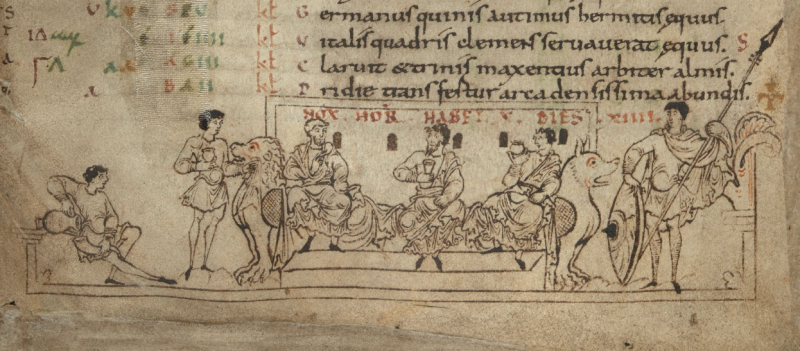
 Written by
A footnote to the idea, I just learned of an obscure Hall from the prose Edda called Vingólf. It’s name may mean “Wine-hall” as well
Good data point!
Worth exploring further, I think.