-
![Profile picture of Jorre]()
Jorre posted in the group Mythology, Theology and Folklore
Elegast,
“Karel ende Elegast” was an original poem in Middle Dutch that scholars think was probably written at the end of the 12th century, otherwise in the 13th century and set in the region of Charlemagne’s castle in Ingelheim.
Elegast is possibly symbolic of the Dutch people’s pre-Christian myth of an ancient elf or folk hero. In the pre-Christian mythology the dwelling in the forest is a religious and sacred dwelling place.
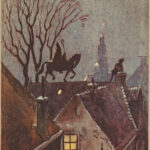
In the poem, Elegast was an old friend of Charlemagne (Christian) that had fallen “into disgrace” (Heathen), and his banishment to the forest and his name connotes he was elven. Elegast could put people to sleep magically, could open locks without keys, and has a magic herb that when put in his mouth allows him to talk to animals. He lived in the forest, thief to the rich people and kind to poor people. He is also said to appear as a knight on a black horse (Frisian?).
Low German folklore describes a dwarf named Elbegast, who was so stealthy that he could steal eggs from underneath birds. While in Northern European folklore, Alegast is known as the king of elves and dwarfs. Also equated with Elegast, is Alberich, a sorcerer from Merovingian legends.
He has even been linked with Oberon, King of the Fairies, who appears in William Shakespeare’s “A Midsummer Night’s Dream”, as well as other medieval and renaissance literature![Profile Photo]() liked this
liked this
The Ingvaeonic Society