 Written by
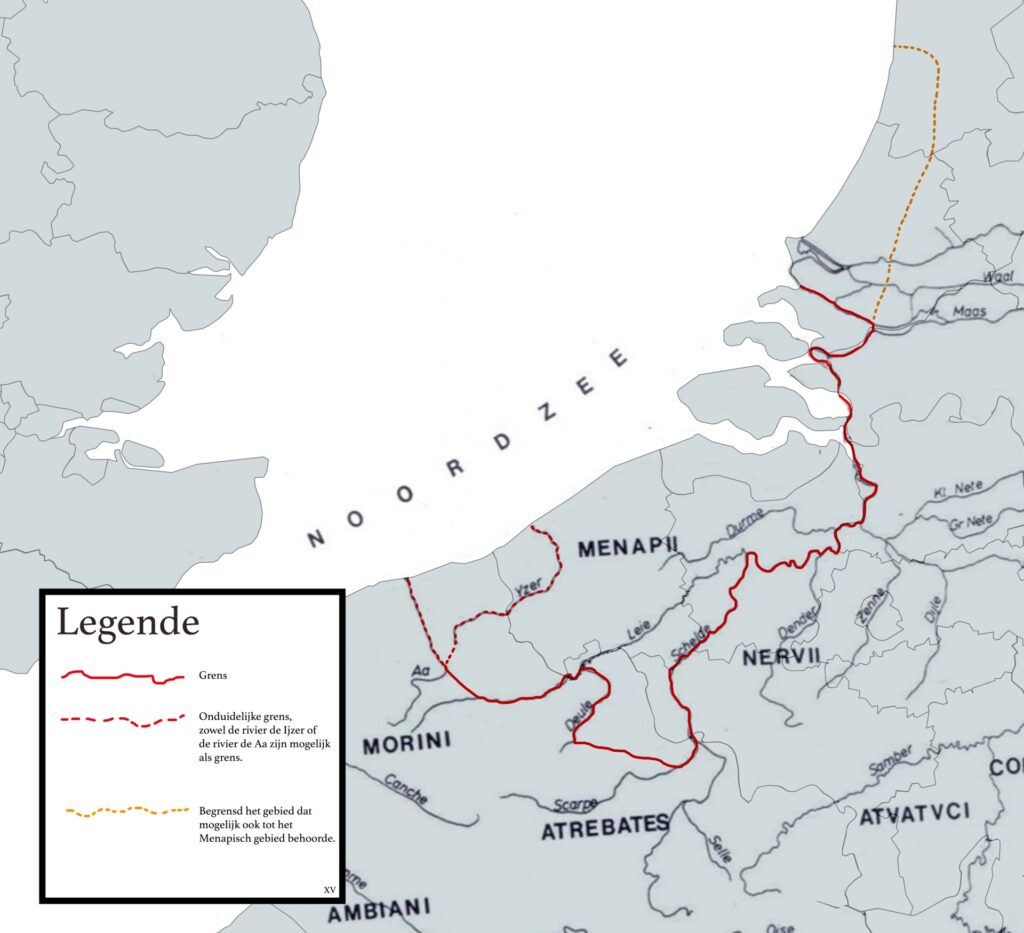
Along the grey North Sea coast, where seaside tourism thrives today, there once existed a world full of mysticism, trade, and divine worship during the Roman era. One of the most remarkable deities from this time is Nehalennia, a mysterious guardian goddess of travelers, merchants, and seafarers. Known primarily from over 160 altars and votive stones discovered in Colijnsplaat and Domburg in Zeeland, her cult may also have left traces further south, possibly even in the territory of the Menapii—a Germanic tribe with Celtic influences that inhabited present-day West Flanders and northern France.
An intriguing legend from Lissewege, a village near Bruges, speaks of an ancient altar dedicated to a female deity. Could it be that the Menapii, through their maritime life and trade contacts, also worshipped Nehalennia?
Our modern worldview often struggles to think beyond borders—just because the temple of Nehalennia was found across the Dutch border doesn’t mean she was unknown in our region. The concepts of the Netherlands and Belgium did not yet exist.
Traces of Nehalennia worship have been found in Tongeren and even in Germany. It would be naive to exclude our own coastal region.
Archaeological Traces and Trade Routes
In Roman times, the Menapii were known as a coastal people engaged in significant trade, connected by rivers and sea to Britannia, Gaul, and Germania. Roman goods, amphorae, and pottery have been discovered in various locations in West Flanders, including the area around Bruges and the mouth of the Yser River.
The most important Nehalennia altars in the Netherlands were donated by merchants dealing in salt, wine, and pottery, who prayed for protection during their North Sea crossings. Given the similar trade networks the Menapii participated in, it is not unthinkable that they too venerated this goddess—or at least knew of her and perhaps integrated her into their own religious practices.
The Legend of Lissewege
According to an old folk legend from Lissewege, a village with a rich medieval history, there once stood a sanctuary or altar dedicated to a female deity. In some versions, this figure is called a “white lady” or a “sea goddess” who protected fishermen and travelers. Some local historians suggest this could be a continuation of a pre-Christian cult later merged with Christian symbolism.
Lissewege is strategically located between Bruges and the coast, with access to waterways that were likely navigable in Roman times. This would make it a logical site for a sanctuary dedicated to a protector goddess of the sea and travel. The presence of a white church on a former pagan site—a common strategy in Christianization—strengthens the possibility that an older worship was replaced.
Folklore and Syncretism
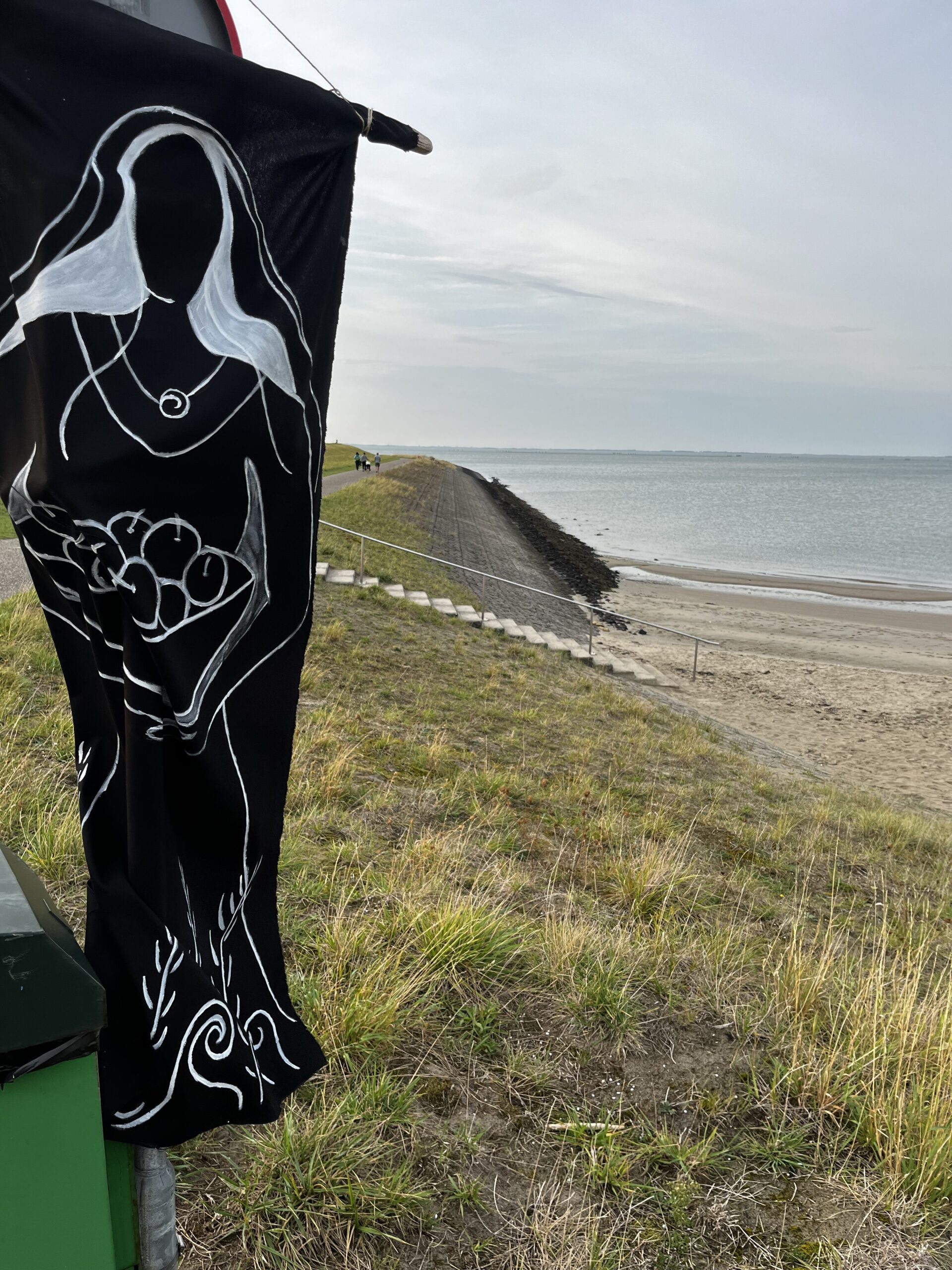
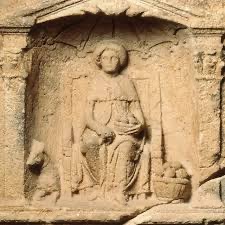
The characteristics of Nehalennia—usually depicted with a basket of fruit, a dog by her side, and maritime symbolism—may resonate with later Flemish folk figures. The image of a female protector of travelers, associated with abundance and safety at sea, continued to live on in regional stories, roadside chapels, and even iconography that blurs the line between Christian and pagan.
In the light of religious syncretism—the blending of different religious traditions—it is quite possible that Nehalennia survived in this region under a different name or in an altered form. Even Marian devotion along the coast, such as in Oostduinkerke or De Panne, may carry echoes of this older tradition.
Conclusion: A Forgotten Coastal Goddess of Flanders?
Although hard archaeological evidence of Nehalennia worship in Flanders is still lacking, indirect traces—such as the legend of Lissewege, the maritime culture of the Menapii, and their connections with the Zeeland and Gallic coasts—suggest that her cult may well have reached these shores. The overlap in functions (protection, travel, fertility) and her survival in folklore and possibly in medieval religious sites make Nehalennia a fascinating example of how ancient deities live on through the mists of time.
Perhaps it is time for renewed archaeological and historical research along the Flemish coast to determine whether Nehalennia left her footprints here as well.